

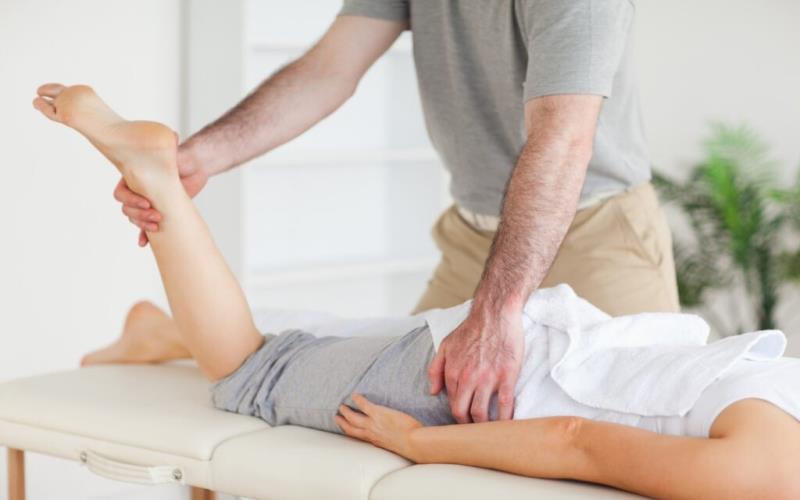
With the raise in popularity of working from home in recent years, the incidence of sciatica is on the rise. Sciatica is frequently linked to working from home, as it can be caused by long periods sitting in the same position – particularly in a poorly set up work chair – and a lack of general movement and activity.
With its focus on spinal realignment and treating the root of the problem, more and more people are turning to a sciatica osteopath to treat their sciatica symptoms. In this article, we’ll look at exactly what causes sciatica, and why osteopathy is becoming such a popular choice.
What is Sciatica?
Sciatica is the term given to any medical condition which causes pain in the sciatic nerve. The sciatic nerve is the longest in the body, running from the lower spine, down through the buttocks and the back of the thigh. It is responsible for controlling many of the muscles in the leg.
Problems with the sciatic nerve can occur in many different ways. Sometimes a herniated or ‘slipped’ disc can press against the nerve, causing pain. Poor posture and poor sitting position can also lead to trouble with the sciatic nerve due to misalignment in the lower spine. Various chronic conditions can also cause sciatica.
The symptoms of sciatica vary greatly from person to person. For some, sciatica might be felt as simply an occasional tingling or numbness. For others it can cause extreme and debilitating pain, preventing even simple day-to-day activities such as walking. The nature of symptoms are difficult to predict, but for most people sciatica is felt as a shooting pain running from the lower back, through the buttocks and hip and down through the leg on one side.
What is Osteopathy?
Osteopathy is a physical therapy that focuses on the correct alignment of the joints and spine to allow the body’s natural healing mechanisms to work more effectively. Osteopaths use a range of techniques similar to physiotherapists and chiropractors. The most characteristic of these is the high velocity thrust, which is used to push joints and vertebrae back into alignment. This produces a cracking or popping sound, which is harmless and is simply air escaping from the joint in the same way as you might crack your knuckles.
Osteopaths also use a range of soft tissue techniques including massage and myofascial release. This improves blood flow to tight muscles and tissues, removes waste products and encourages healing. Techniques such as joint mobilization and stretching may also be used, to improve flexibility and range of motion of a joint, allowing the joint to move more freely.
Many osteopaths also combine acupuncture with their treatment. Most practice a modern form of acupuncture known as Western Acupuncture or Dry Needling. Unlike traditional Chinese acupuncture, Western Acupuncture is not concerned with energy pathways but with simply increasing blood flow to muscles and tissues by the insertion of very fine needles, which cause a minor injury response in the affected area.
Treating Sciatica with Osteopathy
Osteopathy is a popular and effective treatment for most cases of sciatica because it gets directly to the root of the problem, without simply masking the symptoms with painkillers.
Through a physical examination, the osteopath will identify exactly where the problem with the sciatic nerve is occurring, typically by the nerve being pinched somewhere in the lower spine. The sciatic nerve originates in various places between the lower vertebrae of the spine before joining to form one nerve, so there are various places the root problem could occur. Should the osteopath consider it necessary, they can also refer the patient for further diagnostic tests such as X-rays or an MRI.
Once the diagnosis is complete, the osteopath will work to relieve the pressure on the sciatic nerve. This may often be by improving spinal alignment to prevent discs or vertebrae from pressing on or pinching the nerve. The surrounding muscles may also need work to allow them to relax enough to maintain correct spinal alignment, or the hip joints mobilized and stretched to help the sciatic nerve follow its path unencumbered.
Treatment for minor cases may only require a single session, or for more complex or severe cases, a course of treatment may be required.
Other Treatment Options
Although physical therapy such as osteopathy is effective in the vast majority of sciatica cases, in some cases the problem is too severe to be fixed with physical therapy alone. If this is the case it will typically be confirmed by diagnostic imaging such as an X-ray, and the patient will be referred to an orthopedic surgeon for surgery on the affected area. This may involve removing part of the bone that is pressing on the nerve in order to relieve the pressure.
