

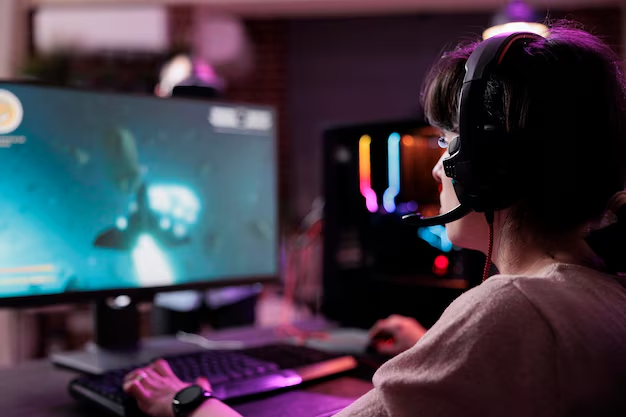
The world of online gaming has evolved tremendously over the past few decades, transforming from simple pixelated screens to immersive virtual experiences. However, despite these advancements, one significant area that still requires attention is accessibility. For many gamers with disabilities, the gaming industry has often felt like an exclusive club, with several barriers preventing them from fully enjoying the experience. This article explores the importance of accessibility in online gaming, the challenges faced by gamers with disabilities, and the steps the industry is taking to break down these barriers.
The Importance of Accessibility in Online Gaming
Accessibility in online gaming is not just about making games playable for everyone; it’s about ensuring that all players, regardless of their physical or cognitive abilities, can enjoy the same level of immersion and engagement. The gaming community is diverse, with players from all walks of life, including those with disabilities. According to recent studies, about 15% of the global population lives with some form of disability. This statistic highlights the importance of creating an inclusive environment where everyone can participate and enjoy gaming.
Challenges Faced by Gamers with Disabilities
Gamers with disabilities face a variety of challenges that can significantly impact their ability to enjoy online gaming. One of the most common issues is the lack of customizable controls. Many online toto games are designed with standard control schemes that may not be suitable for players with limited mobility or dexterity. This can make it difficult for these gamers to perform in-game actions or navigate through menus effectively.
Another significant barrier is the absence of assistive technologies. For example, players with visual impairments often struggle with games that rely heavily on visual cues without offering audio alternatives. Similarly, those with hearing impairments may find it challenging to play games that do not include subtitles or visual indicators for in-game sounds.
Cognitive disabilities can also present challenges in online gaming. Games that require quick thinking, complex problem-solving, or multitasking can be overwhelming for players with cognitive impairments. The lack of difficulty adjustment options or simplified gameplay modes further exacerbates these challenges, making it harder for these players to engage with the content.
Social interaction is another area where accessibility issues arise. Online gaming often involves communication with other players, which can be difficult for those with speech or hearing impairments. The lack of alternative communication methods, such as text-to-speech or voice-to-text options, can limit these players’ ability to fully participate in the social aspects of gaming.
Steps Towards Accessibility in Online Gaming
The gaming industry has started to recognize the importance of accessibility, with many developers taking steps to create more inclusive experiences. One of the most significant developments in recent years has been the introduction of customizable controls. Games like slot, “The Last of Us Part II” and “Assassin’s Creed Valhalla” have set new standards by allowing players to remap controls, adjust difficulty settings, and enable various assistive features. These options empower players with disabilities to tailor the gaming experience to their needs, making it more enjoyable and accessible.
Another critical advancement is the inclusion of assistive technologies. For example, Microsoft’s Xbox Adaptive Controller has been a game-changer for players with limited mobility. This device allows users to connect a variety of external inputs, such as switches, buttons, and joysticks, to create a custom control setup that works best for them. Similarly, advancements in voice recognition software have made it possible for players to control games using voice commands, offering a hands-free gaming experience.
Conclusion
Accessibility in online gaming is an issue that cannot be overlooked. As technology advances and the gaming community continues to grow, the industry must prioritize inclusivity. By breaking down the barriers that prevent gamers with disabilities from fully enjoying online games, developers can create a more diverse, vibrant, and inclusive gaming world. The steps taken so far are promising, but there is still much work to be done. With continued effort and collaboration, the future of online gaming can be one where everyone, regardless of their abilities, can join in the fun.
